Most business owners in Nebraska are overpaying for "cheap" hardware.
It happens every week. A router dies, the internet goes down, and the panic sets in. Instead of calling a professional, someone runs down to Walmart or Best Buy in Lincoln or Omaha, grabs a $150 "Long-Range Gaming Router," plugs it in, and calls it a day. The internet is back on. Problem solved, right?
Wrong. You just walked into the Walmart Router Trap.
As of March 2026, this isn't just an IT preference anymore, it’s a matter of national security and federal compliance. The FCC recently issued massive guidance restricting and banning several foreign-made consumer-grade routers due to massive supply chain vulnerabilities. If you’re running your Omaha manufacturing plant or your Lincoln medical clinic on off-the-shelf gear, you aren't just risking a slow connection. You’re risking a federal headache and a catastrophic data breach.
The FCC Bombshell: March 2026
On March 24, 2026, the FCC took a hard line. They prohibited the importation and sale of a wide swath of new wireless routers manufactured outside the U.S., citing that these devices pose a "severe cybersecurity risk." The agency explicitly stated that these consumer-grade devices introduce vulnerabilities that could disrupt critical infrastructure and the U.S. economy.
For a business owner in Nebraska, this might feel like "big government" noise. It’s not. It’s a warning shot.
When you buy a consumer router from a big-box retailer, you’re buying a device built for Netflix and Minecraft, not for protecting sensitive client data or maintaining 99.9% uptime. These devices are often manufactured by companies with questionable security protocols and "backdoors" that hackers, and foreign entities, can exploit.
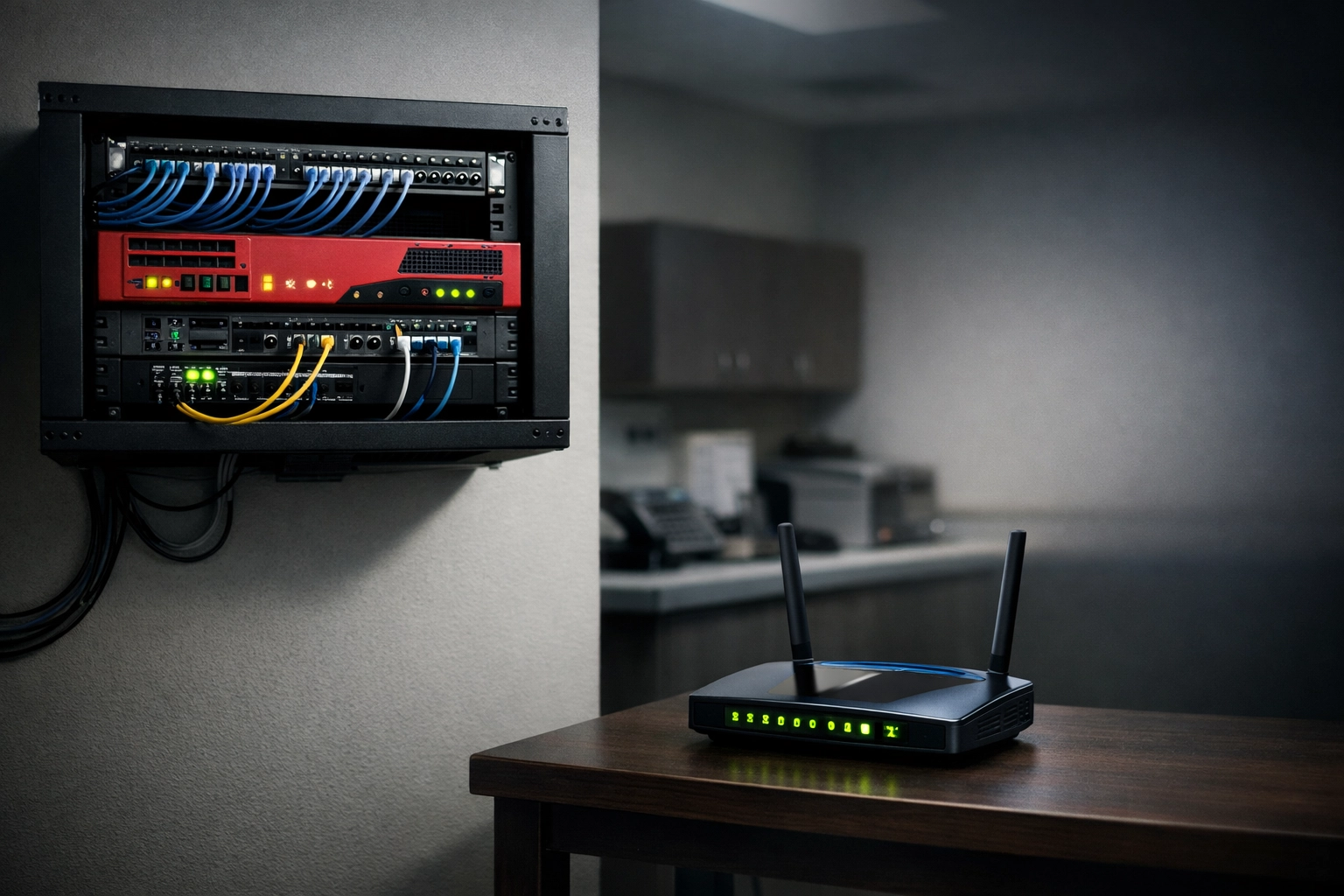
Why 'Off-the-Shelf' is a Security Tax
We call it the "Security Tax." You think you’re saving $500 by skipping the enterprise-grade gear, but you’re actually signing up for a massive bill later.
1. No Real Firewall
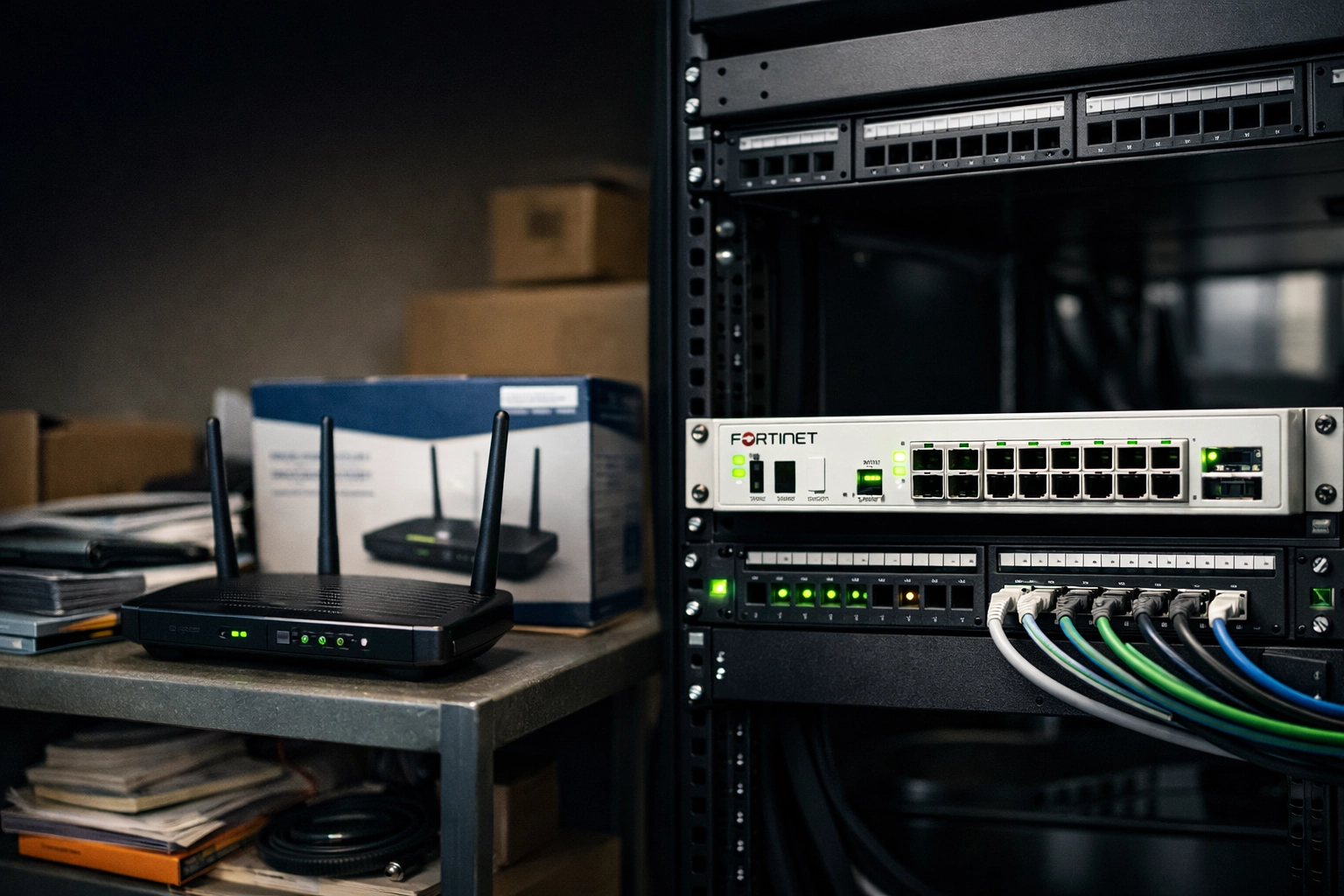
A consumer router has a basic "stateful" firewall. It’s like a screen door. It keeps the flies out, but a determined intruder is coming right through. Enterprise-grade hardware, like the Fortinet systems we deploy at SAINT Technology Services, uses Next-Generation Firewalls (NGFW). These don't just look at where traffic is coming from; they look at what the traffic is. They catch ransomware before it hits your server.
2. Zero Proactive Management
When that Walmart router glitches, who tells you? Nobody. You find out when your staff can't process credit cards or access Microsoft 365 Cloud files. With Managed IT Services in Lincoln NE, we know the hardware is failing before you do. We see the heat spikes, the packet loss, and the attempted intrusions in real-time.
3. The "Update" Nightmare
Consumer routers rarely get security patches. When they do, you have to manually log in and install them. Most business owners haven't updated their router firmware since the day they bought it. That makes you a sitting duck.
The Fortinet Difference: Why We Don't Compromise
At SAINT Technology Services, we aren't interested in band-aid fixes. We use Fortinet hardware because it’s built for the modern threat landscape.
Fortinet is a global leader in cybersecurity, and unlike the "black box" routers banned by the FCC, Fortinet provides transparent, high-performance security that meets the most stringent compliance standards. Whether you’re a law firm in Omaha or a logistics company in Grand Island, you need hardware that is vetted and secure.
When we talk about Cybersecurity Services in Nebraska, the router is the first line of defense. If that line is weak, the rest of your stack doesn't matter.
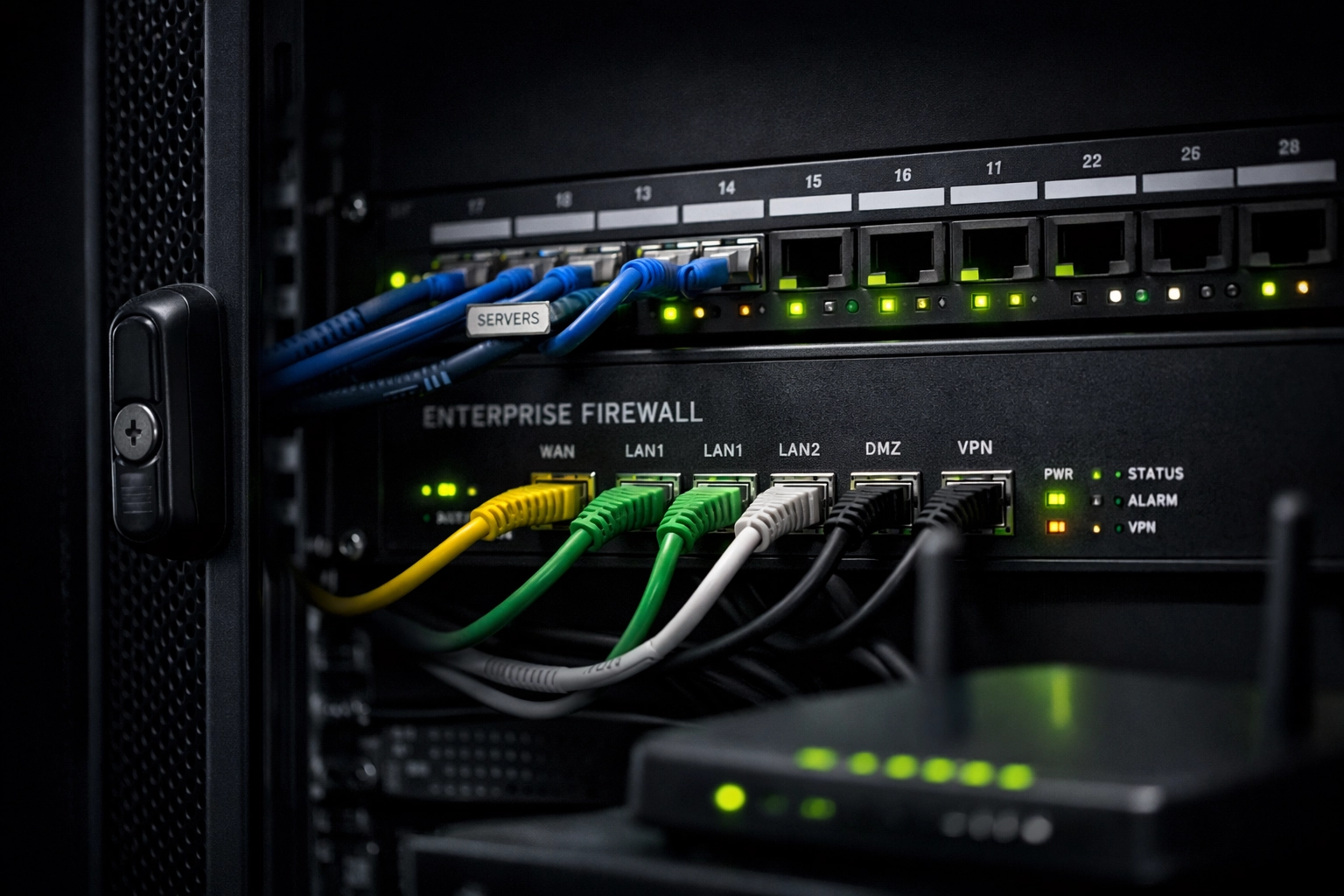
Business Reality: Uptime equals Revenue
Let's talk numbers. If your office in Lincoln goes dark for four hours because a cheap router overheated or got caught in a botnet DDoS attack, what does that cost you?
- Employee Wages: You’re paying people to sit around.
- Lost Opportunity: The phone calls you didn't take.
- Reputation: The client who couldn't get a hold of you and called your competitor instead.
The "savings" from that $150 router vanished in the first twenty minutes of downtime. By investing in professional Network Support in Lincoln NE, you’re buying insurance against the inevitable.
Proactive Management vs. Reactive Panic
Most IT companies in Nebraska operate on a "break-fix" model. Something breaks, they come out, they bill you $200 an hour, and they leave. They love the Walmart Router Trap because it guarantees they’ll be back in six months when it fails again.
We do things differently. As a veteran-owned company, we believe in discipline and precision. We offer flat-rate Managed IT Services that include proactive network management. We don't want your internet to go down because we don't want to deal with the emergency any more than you do. We align our goals with yours: 100% stability.
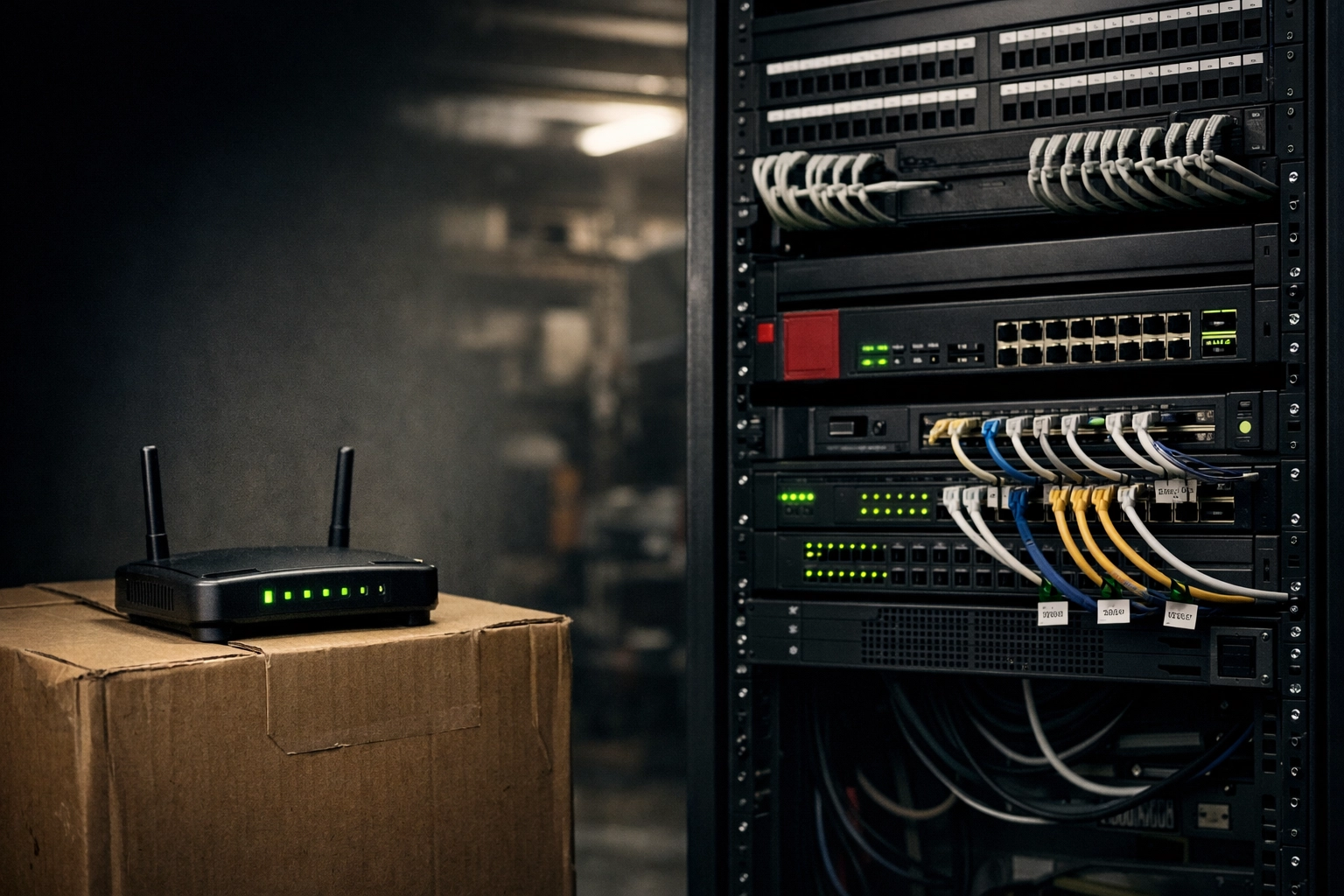
Beyond the Router: Converged Technology
The FCC’s warning is just the tip of the iceberg. In 2026, your network is more than just computers. It’s your Physical Security, your VoIP phones, and your smart thermostats.
If a hacker gets into that consumer-grade router, they have a bridge to your security cameras. They can see who is in the office. They can see when you leave. This is why a unified strategy is essential. You can't separate cyber security from physical security anymore. They are one and the same.
How SAINT Solves This
We don't just sell you a box and walk away. When you partner with SAINT, we handle the transition from "retail-grade" to "enterprise-secure."
- Audit: We find the gaps. Most businesses are shocked to find out how many "consumer" devices are lurking on their network.
- Stabilize: We rip out the vulnerabilities and replace them with high-performance Fortinet hardware.
- Manage: We monitor your network 24/7/365. If a foreign entity tries to ping your firewall, we see it. If your bandwidth is spiking, we fix it.
- Support: You get a local helpdesk. Not a call center halfway across the world, but real people in Nebraska who understand your business.
Serving Businesses in Nebraska
We aren't a giant corporate machine. We’re local. We live and work in the same communities you do.
- Lincoln & Omaha: The hubs of Nebraska business.
- Milford & Hickman: Where manufacturing and local shops keep the economy moving.
- Syracuse & Bellevue: Growing areas that need professional IT to scale.
If your business in Lincoln or Omaha is dealing with slow systems, downtime, or unreliable IT support , SAINT fixes it before it becomes a problem.
Related Services
- Managed IT Services Lincoln NE
- Cybersecurity Services Nebraska
- Network Infrastructure Support
- Compliance and Risk Management
FAQ: The FCC Router Ban & Business Security
Q: Is my current router illegal because of the March 2026 FCC guidance?
A: Not necessarily. The FCC ban primarily affects the importation and sale of new foreign-made models. However, the guidance makes it clear that these devices are major security risks. While you might not be breaking the law by owning one today, you are likely out of compliance with industry standards and insurance requirements.
Q: Why is Fortinet better than the routers I can buy at Best Buy?
A: Fortinet is built for business. It includes specialized processors for security, real-time threat intelligence updates, and the ability to handle hundreds of encrypted connections without slowing down. Consumer routers are built for speed at the expense of security.
Q: Does my cyber insurance care what router I use?
A: Absolutely. Most modern cyber insurance policies in Nebraska now require "Enterprise-Grade" firewalls and proactive monitoring. If you have a breach and the insurance company finds a consumer-grade TP-Link or Netgear at the edge of your network, they may deny your claim.
Q: How do I know if I have a 'Walmart Router'?
A: Look at the brand and where it was purchased. If it’s a brand like Linksys, Netgear, or TP-Link and it was bought at a retail store, it’s a consumer device. If it doesn't require a yearly license for security updates, it isn't protecting your business.
Q: Is Managed IT expensive for a small business in Omaha?
A: It’s cheaper than a data breach. We offer flat-rate pricing designed for SMBs. Our goal is to eliminate the "surprise" IT bill and provide a predictable monthly cost that covers everything from the hardware to the helpdesk.
Q: Can SAINT help with my home office router too?
A: Yes. With the rise of remote work, the "home office" is often the weakest link in a company's security. We provide secure VPN solutions and enterprise-grade hardware for key remote staff to ensure the company network stays safe.
Q: What should I do with my old consumer router?
A: Stop using it for business immediately. It can be repurposed for a guest Wi-Fi network that is completely isolated from your business data, but it should never sit between your servers and the internet.
If you’re still running your business on a "best-buy" budget, you’re playing a dangerous game with your data and your reputation. The FCC has made their stance clear: the hardware you choose matters for national security. It matters for your business security, too.
Stop guessing with your IT. Let’s get you secured.